

A client asked me recently: For in-ear earphones, without changing the internal configuration, what external factors can be used for tuning?
One method is adjusting the EQ settings in the app.
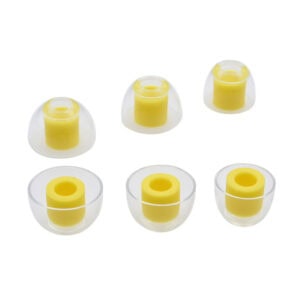
Another effective approach is changing the silicone eartips — different materials, thicknesses, and designs of eartips can subtly influence the sound quality.

In the audio world, some of the biggest differences come from the smallest components.
Silicone eartips are a perfect example.
When people compare earphones, most attention goes to drivers, chipsets, acoustic chambers, or tuning teams. But the final piece that actually sits inside your ear — the eartip — plays a surprisingly large role in how the earphone sounds.
In many cases, simply changing the eartips can make the same earphone sound warmer, brighter, bass-heavier, or more balanced.
1. Why does sound change when you switch eartips?
During faesting and acoustic development, we often see this clearly on measurement curves.
With the same tuning and the same driver, a different eartip can immediately shift:
- Bass level
- Treble clarity
- Vocal position
- Overall thickness or airiness of the sound
This happens mainly because eartips influence two key factors:
✔ Seal (how well the eartip closes the ear canal)
A better seal enhances bass and gives a fuller, more stable sound.
A weaker seal reduces low frequency energy and makes the sound feel thinner.
✔ Bore design (the opening size and shape)
- Narrow bore eartips usually add warmth and bass.
- Wide bore eartips bring more treble and openness.
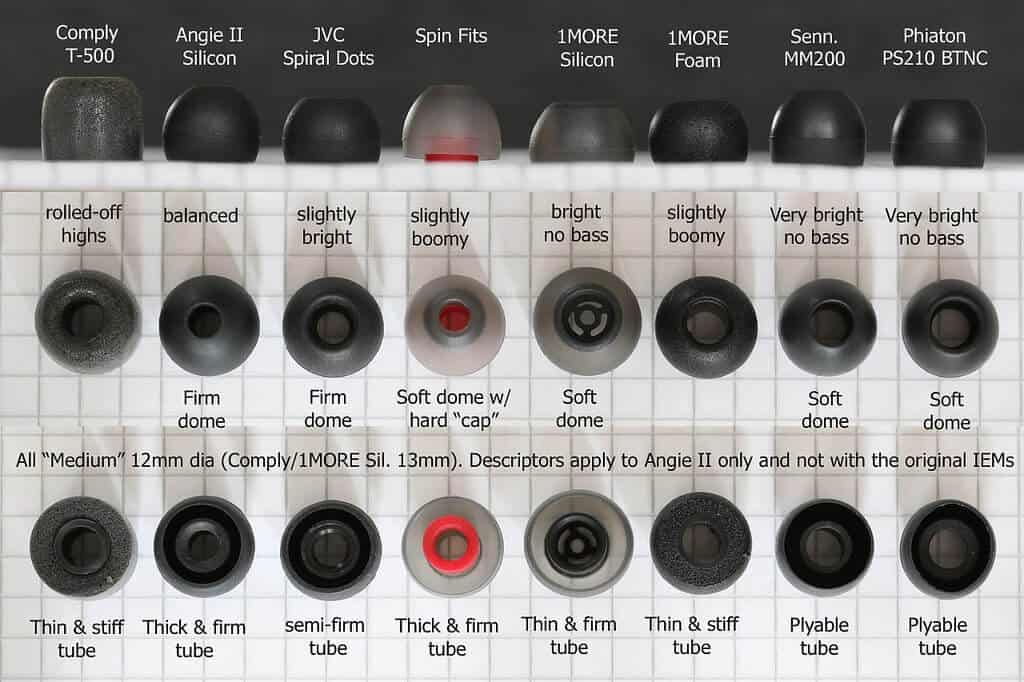
Even subtle changes in the inner shape of the eartip can shift the entire frequency response.
2. Material, thickness, and hardness all affect tuning
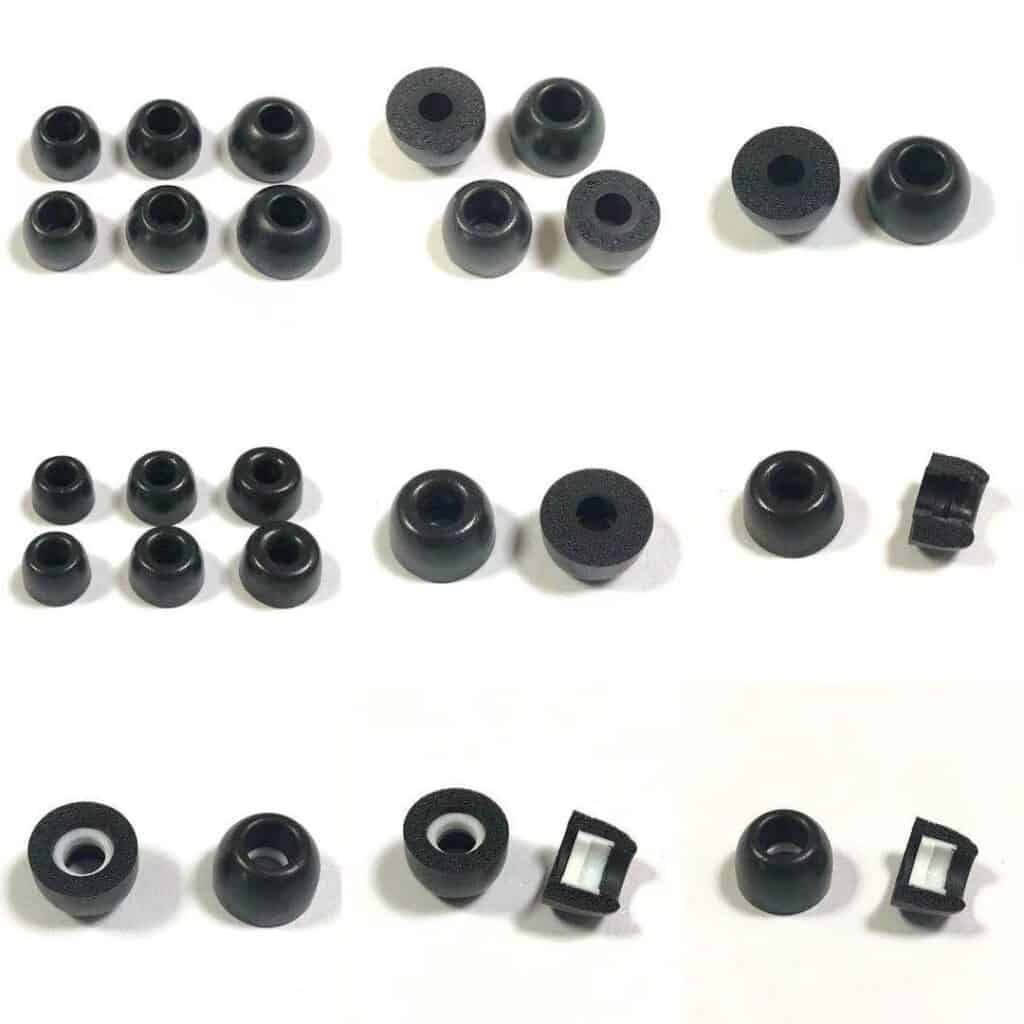
PU Memory Form Eartips
- More comfortable
- Creates a gentler seal
- Helps produce fuller low frequencies
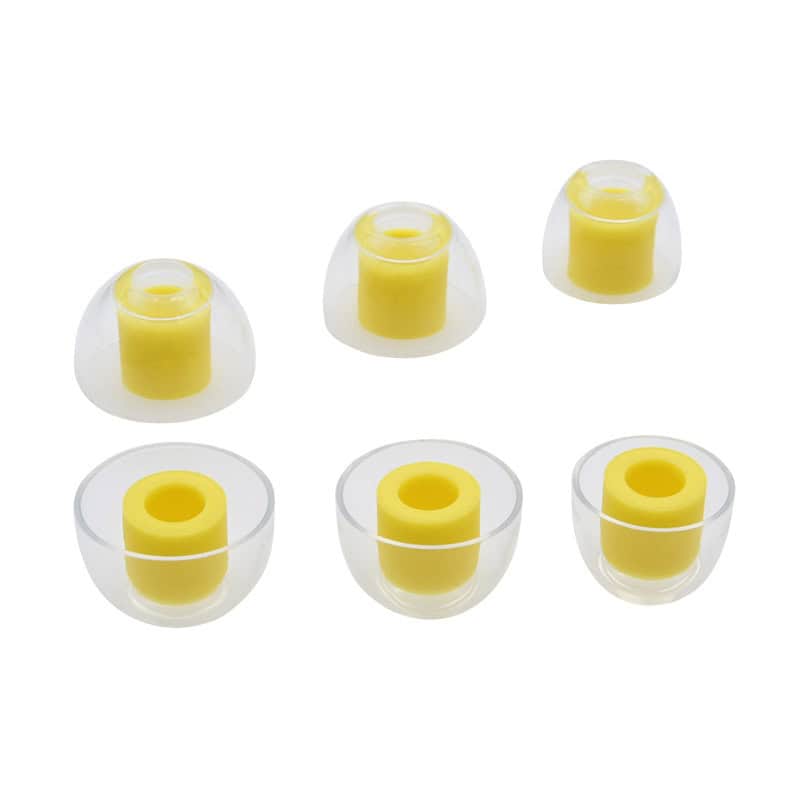
Liquid Silicone Eartips
- Secure Seal
- Balanced Bass
- All-Day Comfort
- Skin-Like Softness
- Durable Fit
- Leak Prevention
- Custom Fit

Eartip thickness also matters.
Thinner eartips vibrate more easily with music, giving a lighter, more energetic feel.
Thicker, molded silicone stabilizes the sound and reduces unwanted resonance.
These small details influence how the sound ultimately reaches your ear — and how you perceive it.
3. Why brands tune their sound with specific eartips
When we develop ODM earphones for clients, eartip testing is always part of the acoustic process.
The “default” eartip included with the product is never random — it’s chosen because:
- It supports the intended tuning direction
- It provides consistent sealing across most users
- It avoids unwanted frequency shifts during mass production
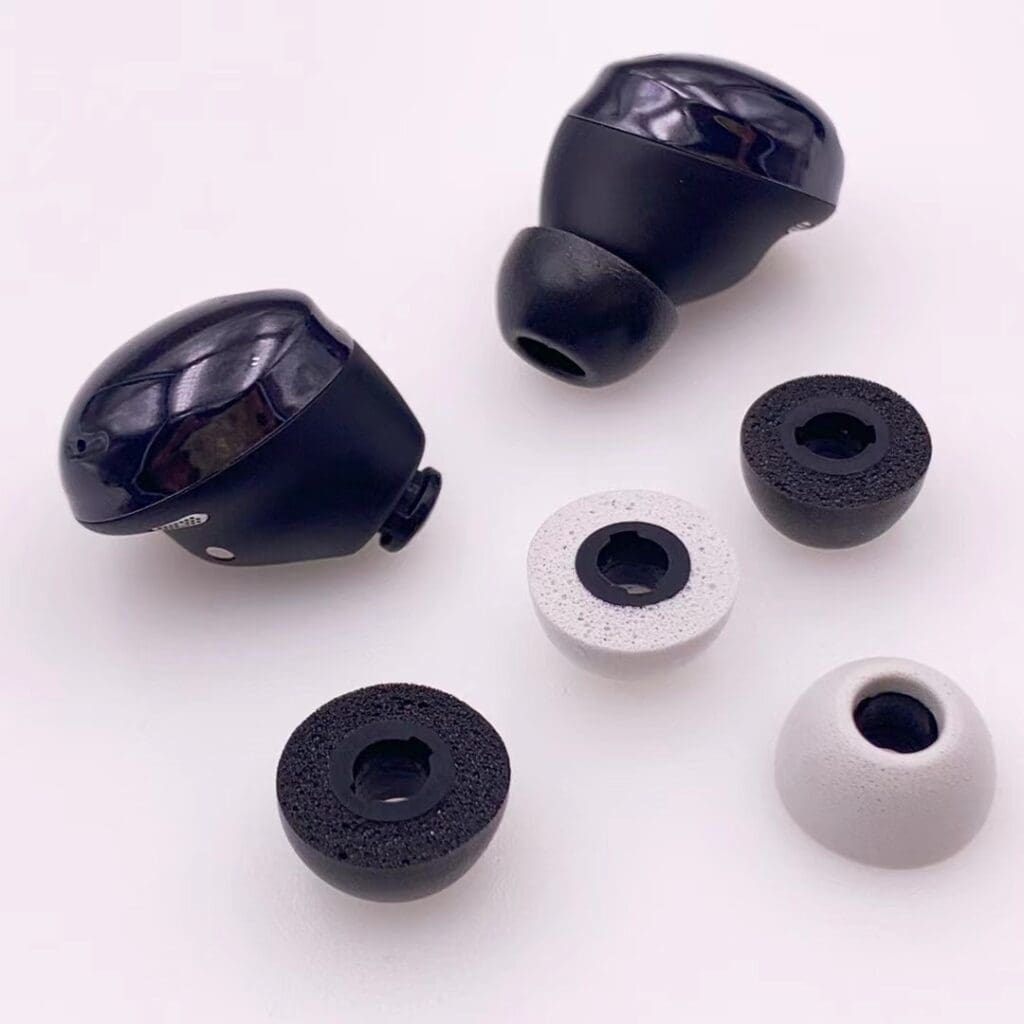
Sometimes, changing to a different generic eartip from the market can completely disrupt the original tuning, even if the earphone structure is unchanged.
This is why professional tuning always includes eartip verification.
4. Comfort does not always equal best sound
Many users replace eartips simply based on comfort.
Comfort is important, but it doesn’t guarantee good acoustic performance.
A good eartip should:
- Fit securely
- Provide a proper seal
- Maintain the intended tuning of the earphone
If your earphones suddenly feel thin, lack bass, or your vocals sound distant, the eartips are often the first thing to check.
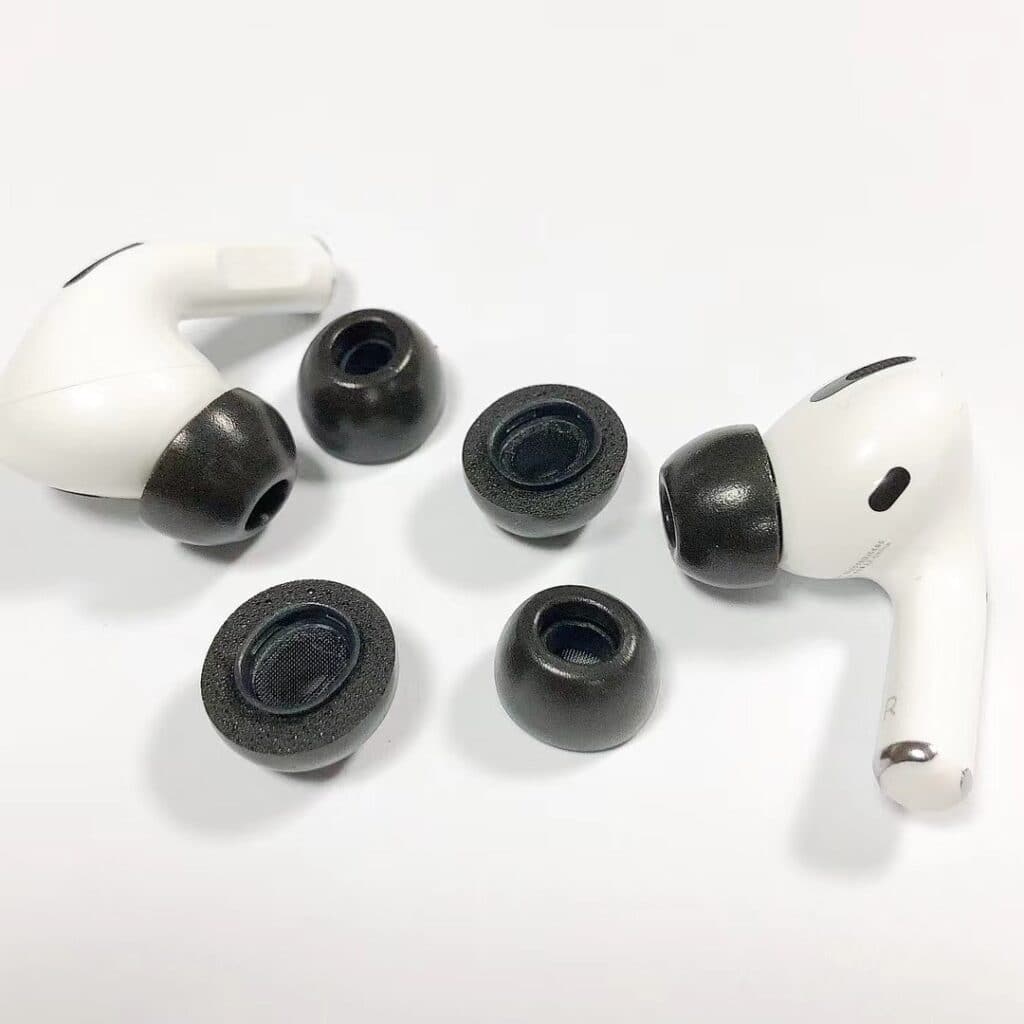
5. Simple advice: pay attention to eartips when testing earphones
If you’re a user:
- Try multiple sizes
- Compare different silicone hardness
- Notice how bass and treble shift
If you’re in the audio business (brand, distributor, factory):
- Don’t change eartips without confirming tuning
- Prepare several bore options during development
- Check eartips first when dealing with customer feedback
A small change at the ear canal can make a very big difference.
Conclusion: In audio, nothing is ever really “small”
From drivers and chambers to silicone eartips, every detail shapes the sound you hear.
Eartips might look simple, but they are one of the most powerful tuning elements in any earphone.
Next time you’re comparing sound quality — whether in a lab, retail shop, or your own home — don’t overlook that little piece of silicone.
It might be influencing your listening experience more than you realize.
In order to enjoy the HiFI In ear monitors to full capabilities, we need to have a proper seal, a proper comfort so that we can enjoy them for longer hours.
For this, a high-quality ear tip is a must-have. There are many aftermarket brands such as Spin Fits, Azla SednaEarfit, Final Audio, Comply, and more that manufacture premium quality ear tips. You get to choose from a wide range of products including both Silicone as well as Foam ear tips. Treat your HiFi In-Ear Monitors with a high-quality Ear tip.