
The Problem

You want to create a Hi-Fi earphone that stands out — not another generic single-dynamic-driver product. You need specific driver configurations (hybrid multi-driver), premium materials, and tuning that targets audiophile standards like the Harman curve. But most factories either cannot handle multi-driver assembly, or require massive MOQs that make specialty products unviable.

DIGCUE’s Solution

DIGCUE offers modular Hi-Fi earphone development with flexible component combinations. You choose the shell, driver configuration, cable, and DAC — we engineer, tune, and manufacture it at MOQs that make sense for the audiophile market.


1. The Hi-Fi Earphone Formula

Hi-Fi Earphone = Earphone Shell + Driver Configuration + Cable + DAC

Each element is independently selectable. Mix and match to create your unique product:

ComponentOptionsImpact
ShellResin, metal (aluminum/stainless), 3D-printed, wood, hybridAesthetics, weight, acoustic chamber properties
DriverDynamic driver (DD), Balanced Armature (BA), hybrid combinationsFrequency response, detail, soundstage
CableOFC copper, silver-plated copper, pure silver, 4-core/8-core, detachable (MMCX/2-pin)Signal transmission, microphonics, user experience
DACIntegrated (Type-C with DAC chip), external, or none (3.5mm analog)Resolution, power output, compatibility

2. Driver Configuration Options

ConfigurationNotationSound CharacteristicsBest For
Single Dynamic Driver1DDFull-bodied bass, natural timbre, wide soundstageWarm, musical sound signatures
Single Balanced Armature1BAPrecise, detailed mids and highsVocal-focused, monitoring
1 Dynamic + 1 Balanced Armature1DD + 1BADD handles bass, BA handles mids/highs. Balanced hybrid sound.Entry-level Hi-Fi, versatile listening
1 Dynamic + 2 Balanced Armature1DD + 2BADD for bass, dedicated BAs for mids and highs separately. Greater detail and separation.Mid-tier Hi-Fi, detail-oriented listeners
1 Dynamic + 3 Balanced Armature1DD + 3BADD for sub-bass/bass, BAs split across low-mid, mid, and high frequencies. Professional-grade resolution.Premium Hi-Fi, critical listening
1 Dynamic + 4 Balanced Armature1DD + 4BADD for bass foundation, 4 BAs covering full mid-to-treble spectrum with extreme precision. Flagship-level detail.Flagship Hi-Fi, audiophile market

Crossover Design:

Multi-driver configurations require precision crossover networks to divide frequency bands cleanly between drivers. DIGCUE’s acoustic engineers design custom crossover circuits for each configuration, ensuring:

No frequency overlap or cancellation between drivers

Smooth phase alignment across the entire frequency range

Each driver operating in its optimal bandwidth


3. Tuning Philosophy — Harman Curve & Beyond

What is the Harman Curve?

The Harman target response is a scientifically researched frequency response curve that represents what the majority of listeners perceive as “good sound.” It features slightly elevated bass, neutral mids, and a gentle treble presence.

DIGCUE’s tuning approach:

Tuning TargetDescriptionMarket Fit
Harman CurveScientifically validated “crowd-pleaser” — slight bass boost, neutral mids, smooth trebleMass market Hi-Fi, safe choice for broad appeal
Flat/ReferenceMinimal coloration, studio monitor-like accuracyAudio professionals, mixing/mastering use
V-shapedElevated bass and treble, recessed midsEDM, pop, bass-heavy genres
WarmElevated low-end, smooth treble rolloffJazz, acoustic, vocal-focused listening
Bright/AnalyticalElevated upper mids and treble, detailed and forwardClassical, detail-oriented audiophiles
CustomClient-specified target curve based on brand sound identityBrands with established audio DNA

Our tuning process for Hi-Fi products:

Client selects target curve or provides reference (competitor product, frequency response graph, or verbal description)

Driver configuration selected to physically support the target (e.g., 1DD+2BA for detailed mids/highs with solid bass)

Acoustic chamber geometry optimized (shell internal volume, porting, damping materials)

Crossover network designed and tuned

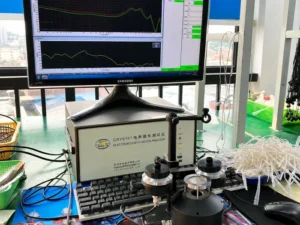
Measured on Hi-Res certified instruments — frequency response, impedance, THD, channel matching

Listening evaluation by “Golden Ear” engineers

Final measurement report delivered with production samples


4. Hi-Fi Wired Earphones

ElementOptions
Connector3.5mm single-ended, 4.4mm balanced, 2.5mm balanced
Cable terminationFixed cable or detachable (MMCX, 2-pin 0.78mm)
Cable materialOFC copper, silver-plated OFC, single-crystal copper, pure silver
Cable construction4-core, 8-core, braided, twisted
DAC integrationNone (analog) or Type-C with integrated DAC chip
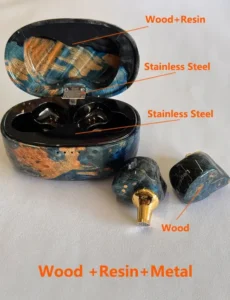
Shell materialCNC aluminum, stainless steel, resin (transparent/opaque), stabilized wood, 3D-printed resin

Type-C Hi-Fi Wired Earphones (with DAC):

For devices without 3.5mm headphone jacks, we integrate high-performance DAC chips directly into the cable:

DAC ChipSNRFeatures
Bluetrum (AB Chips)High SNR, low noise floorCost-effective, DIGCUE co-tuned for minimal background noise
KT seriesHigh SNRGood price-performance, stable supply

DIGCUE collaborates directly with Bluetrum to reduce noise floor through firmware-level optimization — achieving premium-tier silence at mid-tier pricing.


Hi-Fi TWS Earphones

Hi-Fi and TWS were once considered incompatible. Not anymore. With advanced Bluetooth codecs and high-quality driver configurations, true wireless Hi-Fi is achievable.

ElementOptions
Driver configuration1DD, 1DD+1BA, 1DD+2BA (practical limit for TWS shell size)
Bluetooth codecSBC, AAC, aptX, aptX Adaptive, LDAC, LC3/LC3plus
ChipsetQualcomm QCC series, Airoha, BES (Bestechnic), domestic Hi-Fi chipsets
ShellCompact resin or metal, must accommodate multi-driver + battery + antenna
TuningHarman curve or custom target, integrated with chipset DSP
ANCOptional — hybrid ANC compatible with multi-driver configurations

Challenges of Hi-Fi TWS (and how DIGCUE solves them):

ChallengeDIGCUE’s Solution
Limited shell space for multiple driversPrecision structural engineering — optimized driver placement and miniaturized crossover
Bluetooth codec limits audio qualitySupport for LDAC (990kbps) and aptX Adaptive for near-lossless transmission
Battery life vs. power-hungry driversEfficient chipset selection + battery capacity optimization within compact form factor
Crossover complexity in tiny enclosureCustom miniaturized crossover PCB integrated into PCBA
Consistent channel matching100% frequency response testing on both L/R channels during production

MOQ Flexibility

Product TypeMOQ (Existing Shell/Platform)MOQ (Custom Shell/New Tooling)
Hi-Fi wired (1DD)500 units3,000 units
Hi-Fi wired (1DD+1BA)500 units1,000 units
Hi-Fi wired (1DD+2BA)500 units1000 units
Hi-Fi wired (1DD+3BA)2,00 units5,00 units
Hi-Fi wired (1DD+4BA)2,00 units5,00 units
Hi-Fi TWS (1DD)500 units1,000 units
Hi-Fi TWS (1DD+1BA)500 units1,000 units
Hi-Fi TWS (1DD+2BA)2,000 units1,000 units
Type-C with DAC1,000 units3,000 units

MOQs are flexible based on component availability and order commitment. Contact us for specific quotation.


7. Configuration Examples

Example A — Entry-Level Audiophile Wired IEM:

Shell: Transparent resin (show internal drivers)
Drivers: 1DD (10mm) + 1BA (Knowles)
Cable: Silver-plated OFC, 4-core, detachable 2-pin
Connector: 3.5mm single-ended
Tuning: Harman curve target
MOQ: 500 units

Example B — Mid-Tier Hi-Fi Wired IEM:

Shell: CNC aluminum
Drivers: 1DD (10mm) + 3BA (Knowles/Sonion)
Cable: 8-core single-crystal copper, detachable MMCX
Connector: 4.4mm balanced
Tuning: Slightly warm with extended treble detail
MOQ: 1,000 units

Example C — Flagship Hi-Fi Wired IEM:

Shell: Stabilized wood + resin hybrid
Drivers: 1DD (10mm bio-diaphragm) + 4BA (Knowles)
Cable: Pure silver 8-core, detachable 2-pin
Connector: 4.4mm balanced + 3.5mm adapter included
Tuning: Custom target curve (client-specified)
MOQ: 1,000 units

Example D — Hi-Fi TWS:

Shell: Compact metal (aluminum alloy)
Drivers: 1DD (6mm) + 1BA
Bluetooth: 5.3, LDAC support
Chipset: Qualcomm QCC series or Airoha
ANC: Hybrid ANC
Tuning: Harman curve with slight bass emphasis
Battery: 6+ hours playback (LDAC), 30+ hours with case
MOQ: 1,000 units

Example E — Type-C Hi-Fi Earphone with DAC:

Shell: CNC aluminum
Drivers: 1DD (10mm) + 2BA
Cable: Fixed Type-C with integrated ESS Sabre DAC
Tuning: Flat/reference with Zhongke Lanxun noise floor optimization
Compatibility: Android + iPad + laptop (USB Audio Class)
MOQ: 1,000 units


8. Quality Control for Hi-Fi Products

Hi-Fi products demand tighter tolerances than standard earphones:

QC ItemStandard EarphoneHi-Fi Earphone (DIGCUE)
Channel matching±3dB±1dB
Frequency response consistency±5dB across units±2dB across units
THD (Total Harmonic Distortion)<3%<1% (at 1kHz, 94dB SPL)
Impedance matching (L/R)±20%±5%
Driver burn-inNot standard4–8 hours burn-in before final test
Listening QCSample-based100% listening check on production line

Who This Is For

Audiophile brands building a Hi-Fi IEM product line

Existing earphone brands adding a premium Hi-Fi tier

Kickstarter/Indiegogo creators launching custom IEM projects

Japanese and Korean market sellers where sound quality is the primary differentiator

Audio enthusiasts starting their own brand with limited initial volume

Tell us your target driver configuration, sound signature, and price point — we will provide a complete proposal including BOM, tuning plan, timeline, and pricing within one week.

Leave a Reply

Your email address will not be published. Required fields are marked *